DeBerardinis, R. J., & Thompson, C. B. (2012). Cellular metabolism and disease: what do metabolic outliers teach us? Cell, 148(6), 1132.
Added by: Dr. Enrique Feoli (03/01/2021, 15:10) Last edited by: Dr. Enrique Feoli (07/01/2021, 19:33)
|
 |
|
Abstract
|
An understanding of metabolic pathways based solely on biochemistry textbooks would underestimate the pervasive role of metabolism in essentially every aspect of biology. It is evident from recent work that many human diseases involve abnormal metabolic states – often genetically programmed – that perturb normal physiology and lead to severe tissue dysfunction. Understanding these metabolic outliers is now a crucial frontier in disease-oriented research. This review discusses the broad impact of metabolism in cellular function, how modern concepts of metabolism can inform our understanding of common diseases like cancer, and considers the prospects of developing new metabolic approaches to disease treatment.
An understanding of metabolic pathways based solely on biochemistry textbooks would underestimate the pervasive role of metabolism in essentially every aspect of biology. It is evident from recent work that many human diseases involve abnormal metabolic states – often genetically programmed – that perturb normal physiology and lead to severe tissue dysfunction. Understanding these metabolic outliers is now a crucial frontier in disease-oriented research. This review discusses the broad impact of metabolism in cellular function, how modern concepts of metabolism can inform our understanding of common diseases like cancer, and considers the prospects of developing new metabolic approaches to disease treatment.
An understanding of metabolic pathways based solely on biochemistry textbooks would underestimate the pervasive role of metabolism in essentially every aspect of biology. It is evident from recent work that many human diseases involve abnormal metabolic states – often genetically programmed – that perturb normal physiology and lead to severe tissue dysfunction. Understanding these metabolic outliers is now a crucial frontier in disease-oriented research. This review discusses the broad impact of metabolism in cellular function, how modern concepts of metabolism can inform our understanding of common diseases like cancer, and considers the prospects of developing new metabolic approaches to disease treatment.
An understanding of metabolic pathways based solely on biochemistry textbooks would underestimate the pervasive role of metabolism in essentially every aspect of biology. It is evident from recent work that many human diseases involve abnormal metabolic states – often genetically programmed – that perturb normal physiology and lead to severe tissue dysfunction. Understanding these metabolic outliers is now a crucial frontier in disease-oriented research. This review discusses the broad impact of metabolism in cellular function, how modern concepts of metabolism can inform our understanding of common diseases like cancer, and considers the prospects of developing new metabolic approaches to disease treatment.
An understanding of metabolic pathways based solely on biochemistry textbooks would underestimate the pervasive role of metabolism in essentially every aspect of biology. It is evident from recent work that many human diseases involve abnormal metabolic states – often genetically programmed – that perturb normal physiology and lead to severe tissue dysfunction. Understanding these metabolic outliers is now a crucial frontier in disease-oriented research. This review discusses the broad impact of metabolism in cellular function, how modern concepts of metabolism can inform our understanding of common diseases like cancer, and considers the prospects of developing new metabolic approaches to disease treatment.
An understanding of metabolic pathways based solely on biochemistry textbooks would underestimate the pervasive role of metabolism in essentially every aspect of biology. It is evident from recent work that many human diseases involve abnormal metabolic states – often genetically programmed – that perturb normal physiology and lead to severe tissue dysfunction. Understanding these metabolic outliers is now a crucial frontier in disease-oriented research. This review discusses the broad impact of metabolism in cellular function, how modern concepts of metabolism can inform our understanding of common diseases like cancer, and considers the prospects of developing new metabolic approaches to disease treatment.
|
| Notes |
|
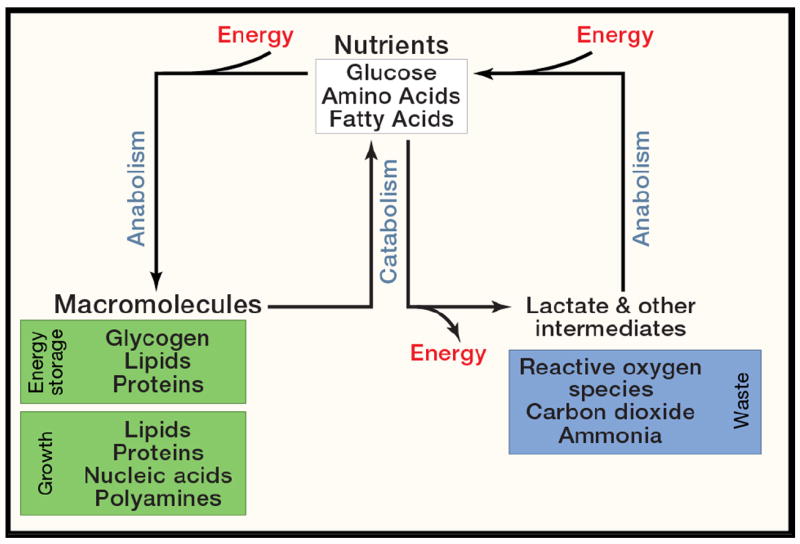
An overview of intermediary metabolism
A simplified view of core metabolism, focusing on the use of major nutrients (glucose, amino acids and fatty acids) to produce or store energy, and to grow.
|