BioAcyl Corp

BioAcyl Corp |
|
 |
 |
 |
|
Roy, B., & Palaniyandi, S. S. (2021). Tissue-specific role and associated downstream signaling pathways of adiponectin. Cell & Bioscience, 11(1), 77. Added by: Dr. Enrique Feoli (06/05/2026, 09:37) Last edited by: Dr. Enrique Feoli (06/05/2026, 09:43) |
 |
| Resource type: Journal Article DOI: 10.1186/s13578-021-00587-4 ID no. (ISBN etc.): 2045-3701 BibTeX citation key: Roy2021 View all bibliographic details  |
Categories: BioAcyl Corp Subcategories: Adiponectin Creators: Palaniyandi, Roy Collection: Cell & Bioscience |
Views: 2/17
|
| Abstract |
|
According to the World Health Organization, metabolic syndrome (MetS) can be defined as a pathological condition characterized by abdominal obesity, insulin resistance, hypertension, and hyperlipidemia. The incidence of MetS keeps rising, as at least 35\% of the USA population suffers from MetS. One of the worst comorbidities of metabolic syndrome are cardiovascular diseases that significantly amplifies the mortality associated with this syndrome. There is an urgent need to understand the pathophysiology of MetS to find novel diagnosis, treatment and management to mitigate the MetS and associated complications. Altered circulatory adiponectin levels have been implicated in MetS. Adiponectin has numerous biologic functions including antioxidative, anti-nitrative, anti-inflammatory, and cardioprotective effects. Being a pleiotropic hormone of multiple tissues, tissue-specific key signaling pathways of adiponectin will help finding specific target/s to blunt the pathophysiology of metabolic syndrome and associated disorders. The purpose of this review is to elucidate tissue-specific signaling pathways of adiponectin and possibly identify potential therapeutic targets for MetS as well as to evaluate the potential of adiponectin as a biomarker/therapeutic option in MetS.
Added by: Dr. Enrique Feoli Last edited by: Dr. Enrique Feoli |
| Notes |
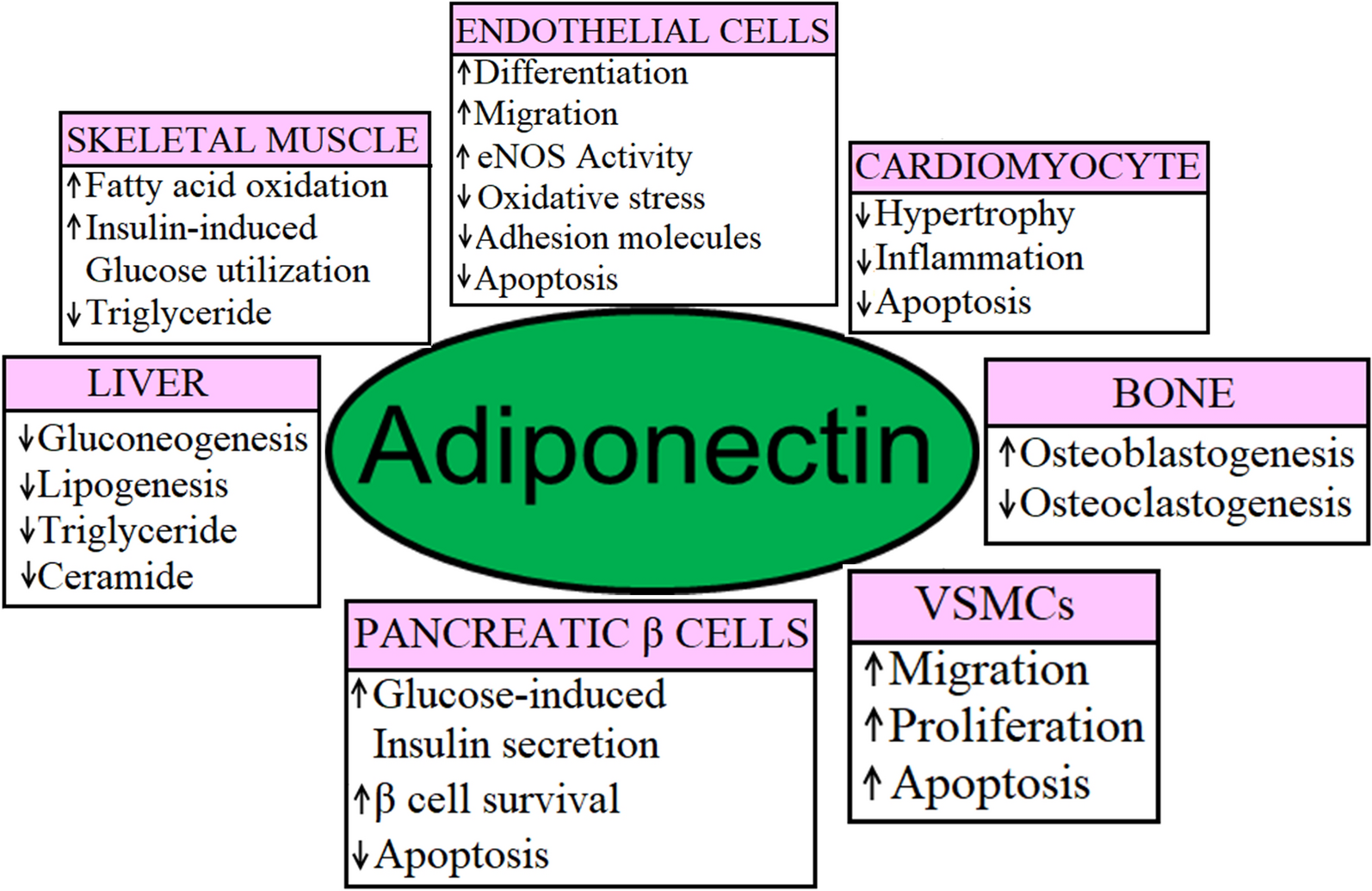
Added by: Dr. Enrique Feoli |