BioAcyl Corp

BioAcyl Corp |
|
 |
 |
 |
|
Imai, K., Iinuma, T., & Sato, S. (2021). Relationship between the oral cavity and respiratory diseases: Aspiration of oral bacteria possibly contributes to the progression of lower airway inflammation. Japanese Dental Science Review, 57, 224–230. Added by: Dr. Enrique Feoli (31/12/2025, 20:13) Last edited by: Dr. Enrique Feoli (31/12/2025, 20:22) |
 |
| Resource type: Journal Article Published DOI: 10.1016/j.jdsr.2021.10.003 ID no. (ISBN etc.): 1882-7616 BibTeX citation key: Imai2021 View all bibliographic details  |
Categories: BioAcyl Corp Subcategories: Mucosal Immunity Keywords: Chronic periodontitis, COPD, COVID-19, Influenza, Oral bacteria, Pneumonia Creators: Iinuma, Imai, Sato Collection: Japanese Dental Science Review |
Views: 30/176
|
| Abstract |
|
The global population is aging, and elderly people have a higher incidence of lower airway diseases owing to decline in swallowing function, airway ciliary motility, and overall immunity associated with aging. Furthermore, lower airway diseases in the elderly tend to have a high mortality rate. Their prevention is important for extending healthy life expectancy and improving the quality of life of each individual. In recent years, the relationship between “chronic periodontitis and oral bacteria, especially the periodontopathic ones” and “respiratory diseases” (e.g., pneumonia, chronic obstructive pulmonary disease, and influenza) has become clear. In addition, the association of several periodontal pathogens with the onset and aggravation of coronavirus disease 2019 (COVID-19) is also being reported. In support of these findings, oral health management has shown to reduce deaths from pneumonia and prevent influenza in nursing homes and inpatient wards. This has led to clinical and multidisciplinary cooperation between physicians and dentists, among others. However, to date, the mechanisms by which “chronic periodontitis and oral bacteria” contribute to lower airway diseases have not been well understood. Clarifying these mechanisms will lead to a theoretical basis for answering the question, “Why is oral health management effective in preventing lower airway diseases?”
Added by: Dr. Enrique Feoli Last edited by: Dr. Enrique Feoli |
| Notes |
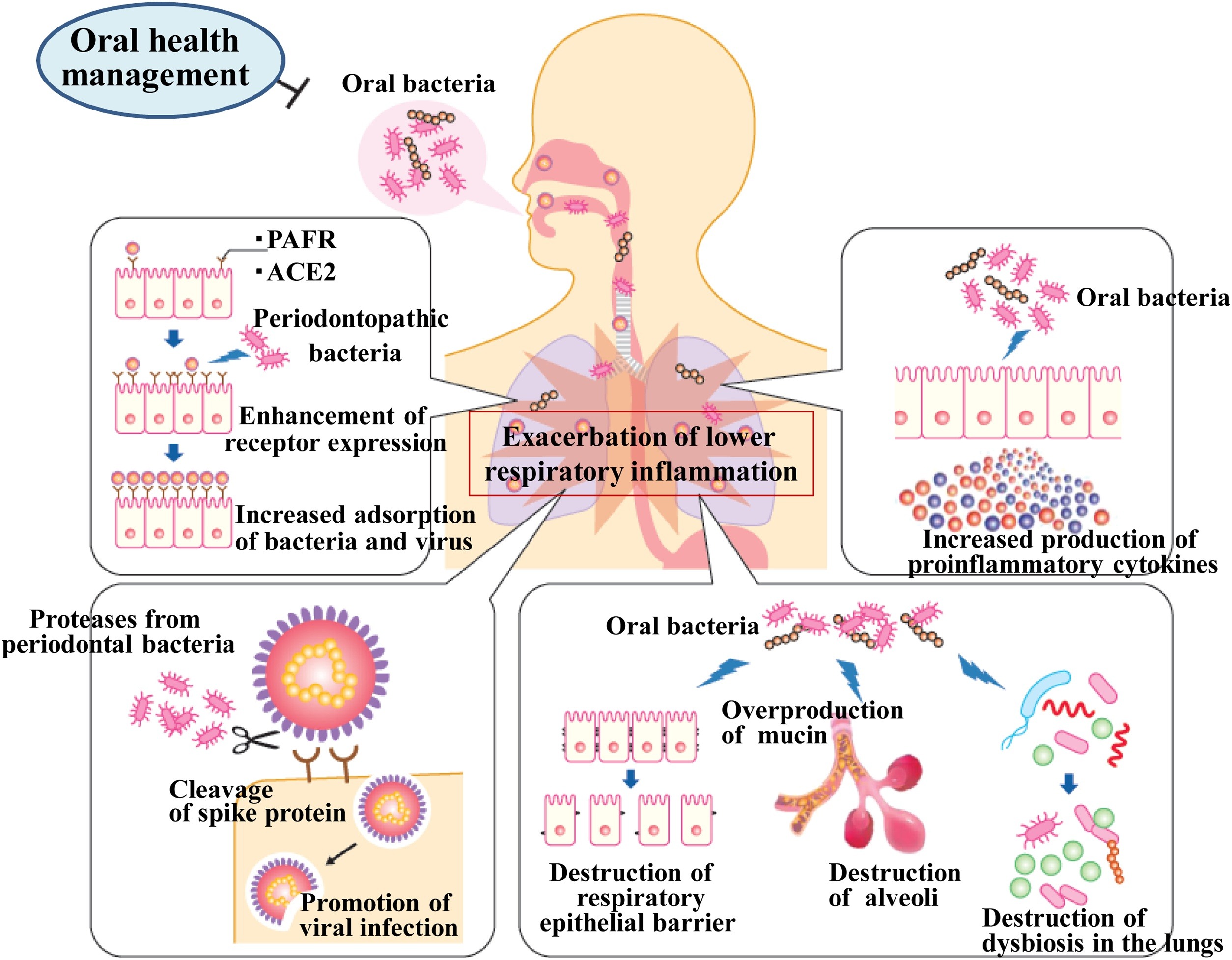
Enzymes secreted by oral bacteria can spread influenza infection. In the life cycle of influenza viruses, adsorption to target cells by hemagglutinin (HA) and release from target cells by neuraminidase (NA) are the most important processes for viral replication and spread. Gingipains secreted by the periodontal pathogen Porphyromonas gingivalis can facilitate viral infection by cleaving influenza virus HA into HA1 and HA2. In addition, NA secreted by oral streptococci may act as a substitute for viral NA, whose activity is inhibited by anti-NA drugs, resulting in a weakened effect of anti-NA drugs and accelerated viral release. Added by: Dr. Enrique Feoli Last edited by: Dr. Enrique Feoli |