BioAcyl Corp

BioAcyl Corp |
|
 |
 |
 |
|
Cooke, J. P., & Lai, L. (2023). Transflammation in tissue regeneration and response to injury: How cell-autonomous inflammatory signaling mediates cell plasticity. Advanced Drug Delivery Reviews, 203, 115118. Added by: Dr. Enrique Feoli (05/05/2025, 00:46) Last edited by: Dr. Enrique Feoli (05/05/2025, 16:40) |
 |
| Resource type: Journal Article Published DOI: 10.1016/j.addr.2023.115118 ID no. (ISBN etc.): 0169-409X BibTeX citation key: Cooke2023 View all bibliographic details  |
Categories: BioAcyl Corp Subcategories: Transflammation Keywords: DNA accessibility, Epigenetics, Innate immunity, Metabolism, regeneration, RNS, ROS, Single-cell omics, Transflammation Creators: Cooke, Lai Collection: Advanced Drug Delivery Reviews |
Views: 33/127
|
| Abstract |
|
Inflammation is a first responder against injury and infection and is also critical for the regeneration and repair of tissue after injury. The role of professional immune cells in tissue healing is well characterized. Professional immune cells respond to pathogens with humoral and cytotoxic responses; remove cellular debris through efferocytosis; secrete angiogenic cytokines and growth factors to repair the microvasculature and parenchyma. However, non-immune cells are also capable of responding to damage or pathogens. Non-immune somatic cells express pattern recognition receptors (PRRs) to detect pathogen-associated molecular patterns (PAMPs) and damage-associated molecular patterns (DAMPs). The PRRs activation leads to the release of inflammatory cytokines required for tissue defense and repair. Notably, the activation of PRRs also triggers epigenetic changes that promote DNA accessibility and cellular plasticity. Thus, non-immune cells directly respond to the local inflammatory cues and can undergo phenotypic modifications or even cell lineage transitions to facilitate tissue regeneration. This review will focus on the novel role of cell-autonomous inflammatory signaling in mediating cell plasticity, a process which is termed transflammation. We will discuss the regulation of this process by changes in the functions and expression levels of epigenetic modifiers, as well as metabolic and ROS/RNS-mediated epigenetic modulation of DNA accessibility during cell fate transition. We will highlight the recent technological developments in detecting cell plasticity and potential therapeutic applications of transflammation in tissue regeneration.
|
| Notes |
|
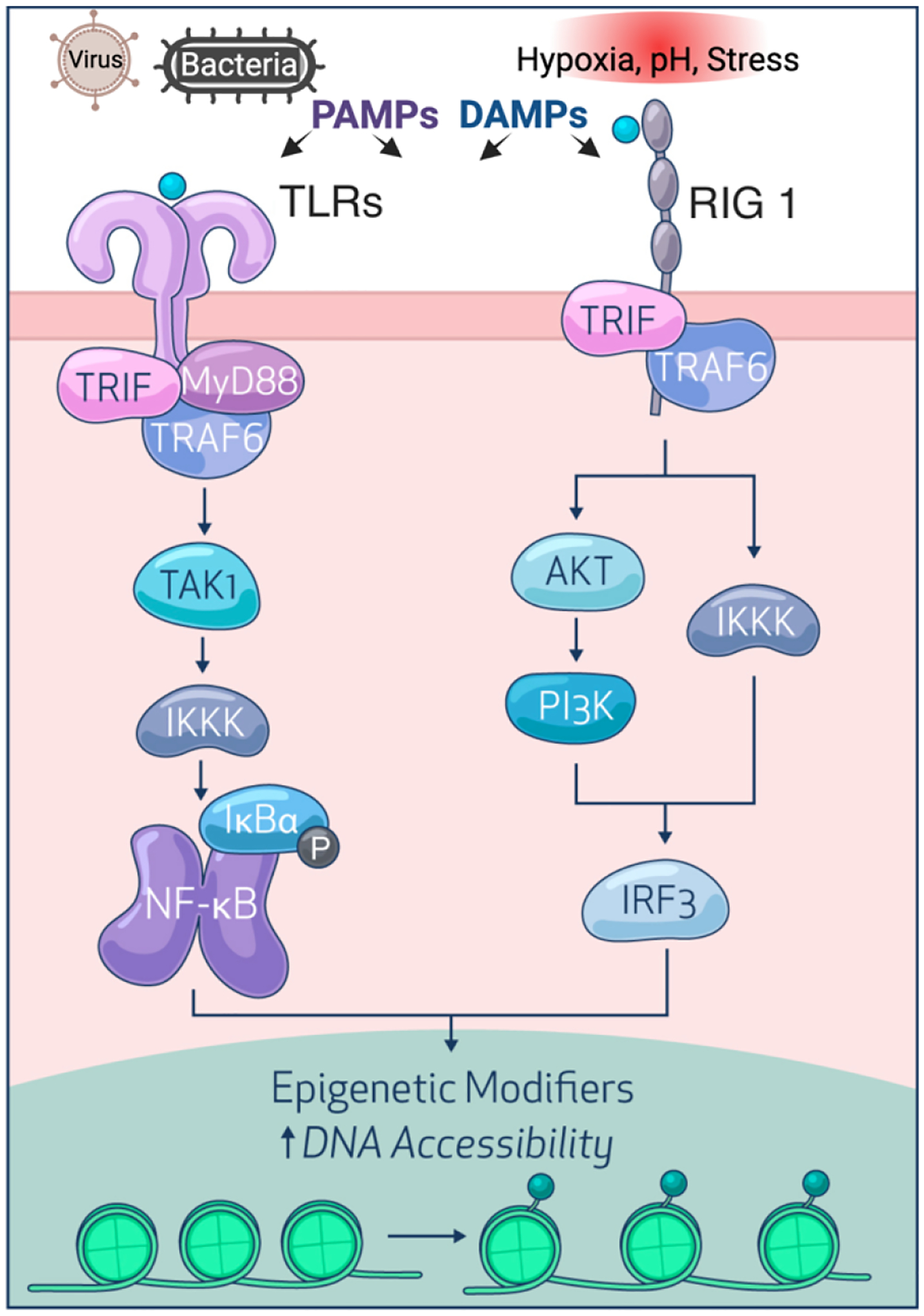
Transflammation opens the Goldilocks Zone
Transflammation. Viruses and bacteria produce PAMPs while hypoxia, pH, stress, and other injurious stimuli generate DAMPs, both of which trigger innate immune signaling by intracellular or transmembrane PRCs such as TLRs and RIG-I. Subsequently, NF-kB or IRF3 (interferon regulatory transcription factor (IRF)) are activated and translocated to the nucleus to alter the expression of epigenetic modifiers, thereby increasing DNA accessibility to facilitate the cell fate transition. Added by: Dr. Enrique Feoli Last edited by: Dr. Enrique Feoli |