BioAcyl Corp

BioAcyl Corp |
|
 |
 |
 |
|
Arkaban, H., Barani, M., Akbarizadeh, M. R., Pal Singh Chauhan, N., Jadoun, S., & Dehghani Soltani, M. (2022). Polyacrylic acid nanoplatforms: Antimicrobial, tissue engineering, and cancer theranostic applications. Polymers, 14(6). Added by: Dr. Enrique Feoli (17/12/2023, 13:47) Last edited by: Dr. Enrique Feoli (17/12/2023, 13:58) |
 |
| Resource type: Journal Article Published DOI: 10.3390/polym14061259 ID no. (ISBN etc.): 2073-4360 BibTeX citation key: Arkaban2022 View all bibliographic details  |
Categories: BioAcyl Corp Subcategories: PECs nanoparticles Creators: Akbarizadeh, Arkaban, Barani, Dehghani Soltani, Jadoun, Pal Singh Chauhan Collection: Polymers |
Views: 28/437
|
| Abstract |
|
Polyacrylic acid (PAA) is a non-toxic, biocompatible, and biodegradable polymer that gained lots of interest in recent years. PAA nano-derivatives can be obtained by chemical modification of carboxyl groups with superior chemical properties in comparison to unmodified PAA. For example, nano-particles produced from PAA derivatives can be used to deliver drugs due to their stability and biocompatibility. PAA and its nanoconjugates could also be regarded as stimuli-responsive platforms that make them ideal for drug delivery and antimicrobial applications. These properties make PAA a good candidate for conventional and novel drug carrier systems. Here, we started with synthesis approaches, structure characteristics, and other architectures of PAA nanoplatforms. Then, different conjugations of PAA/nanostructures and their potential in various fields of nanomedicine such as antimicrobial, anticancer, imaging, biosensor, and tissue engineering were discussed. Finally, biocompatibility and challenges of PAA nanoplatforms were highlighted. This review will provide fundamental knowledge and current information connected to the PAA nanoplatforms and their applications in biological fields for a broad audience of researchers, engineers, and newcomers. In this light, PAA nanoplatforms could have great potential for the research and development of new nano vaccines and nano drugs in the future.
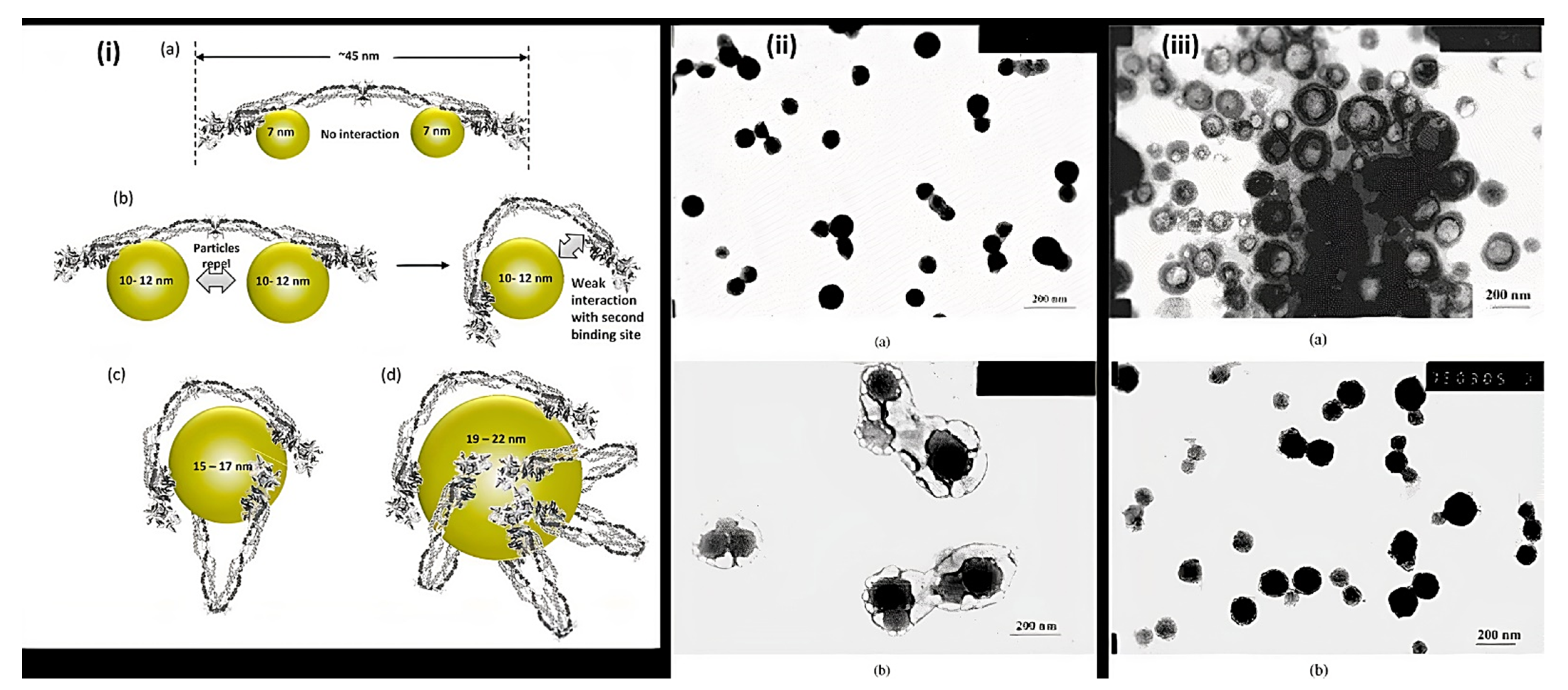
Representation of (i) binding of fibrinogen with PAA/Au nanoparticles (a) Binding of 7 nm nanoparticle to fibrinogen revealing each protein molecule accommodated two nanoparticles (b) 10–12 nm-sized nanoparticles prevent the binding of two particles to each fibrinogen due to the flexibility of fibrinogen at E domain of protein resulting the contact of second binding site with the nanoparticle (c,d) Larger nanoparticles (15–22 nm) can accommodate multiple fibrinogen molecules due to the larger surface area (ii) TEM of PAA-CS nanoparticles at (a) pH = 4.5 and (b) at pH = 7.4. (iii) Morphology of PAA-CS nanoparticles synthesized by the various processes at 4.5: (a) CS dropping into PAA solution; (b) PAA dropping into CS solution, (Reprinted from Refs. [81,83] with permission) Added by: Dr. Enrique Feoli Last edited by: Dr. Enrique Feoli |