BioAcyl Corp

BioAcyl Corp |
|
 |
 |
 |
|
Campoccia, D., Montanaro, L., & Arciola, C. R. (2021). Extracellular dna (edna). a major ubiquitous element of the bacterial biofilm architecture. International Journal of Molecular Sciences, 22(16), 9100. Added by: Dr. Enrique Feoli (17/11/2023, 12:49) Last edited by: Dr. Enrique Feoli (17/11/2023, 17:27) |
 |
| Resource type: Journal Article Published DOI: 10.3390/ijms22169100 ID no. (ISBN etc.): 1422-0067 BibTeX citation key: Campoccia2021 View all bibliographic details  |
Categories: BioAcyl Corp Subcategories: Biofilms Creators: Arciola, Campoccia, Montanaro Collection: International Journal of Molecular Sciences |
Views: 20/312
|
| Abstract |
|
After the first ancient studies on microbial slime (the name by which the biofilm matrix was initially indicated), multitudes of studies on the morphology, composition and physiology of biofilms have arisen. The emergence of the role that biofilms play in the pathogenesis of recalcitrant and persistent clinical infections, such as periprosthetic orthopedic infections, has reinforced scientific interest. Extracellular DNA (eDNA) is a recently uncovered component that is proving to be almost omnipresent in the extracellular polymeric substance (EPS) of biofilm. This macromolecule is eliciting unprecedented consideration for the critical impact on the pathogenesis of chronic clinical infections. After a systematic review of the literature, an updated description of eDNA in biofilms is presented, with a special focus on the latest findings regarding its fundamental structural role and the contribution it makes to the complex architecture of bacterial biofilms through interactions with a variety of other molecular components of the biofilm matrix.
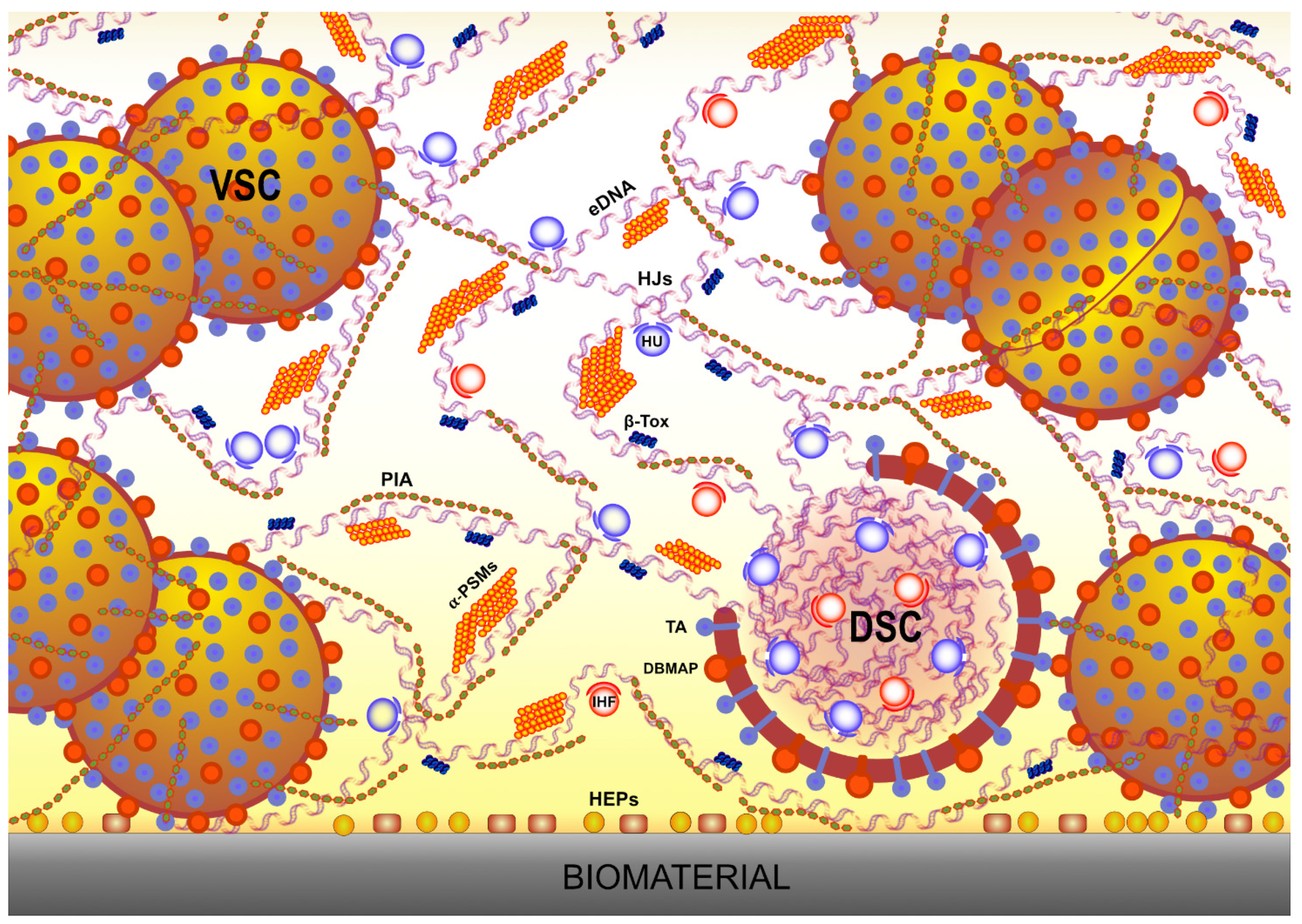
This scheme attempts to illustrate the various and complex molecular interactions taking place within the matrix of staphylococcal biofilms. Water-soluble molecules are retained by their mutual stabilizing interactions. The attention is focused on the variety of molecular species emerged to be involved and the real size ratio among different categories of molecules is not fully respected. During biofilm maturation, eDNA becomes progressively protected by the complexation with the other polymers and resistant to DNase digestion. Legend: VSC, viable staphylococcal cell; DSC, dead staphylococcal cell; HJs, eDNA Holliday junctions; PIA, polysaccharide intercellular adhesin; HU, histone-like nucleoid-associated protein HU; IHF, integration host factor; SaeP, S. aureus Saep lipoprotein; TA, (negatively charged) teichoic acids; β-Tox, S. aureus β-Toxin; α-PSMs, amyloidogenic α-Phenol-soluble modulins; DBMAP, DNA-binding membrane-associated proteins and membrane-anchored lipoproteins such as S. aureus SaeP and IsaB; HEPs, host extracellular-matrix proteins. |