BioAcyl Corp

BioAcyl Corp |
|
 |
 |
 |
|
Hajishengallis, G., & Chavakis, T. (2021). Local and systemic mechanisms linking periodontal disease and inflammatory comorbidities. Nature Reviews Immunology, 21(7), 426–440. Added by: Dr. Enrique Feoli (30/06/2023, 18:31) Last edited by: Dr. Enrique Feoli (30/06/2023, 18:36) |
 |
| Resource type: Journal Article Published DOI: 10.1038/s41577-020-00488-6 ID no. (ISBN etc.): 1474-1741 BibTeX citation key: Hajishengallis2021 View all bibliographic details  |
Categories: BioAcyl Corp Subcategories: Perodontitis Creators: Chavakis, Hajishengallis Collection: Nature Reviews Immunology |
Views: 22/166
|
| Abstract |
|
Periodontitis, a major inflammatory disease of the oral mucosa, is epidemiologically associated with other chronic inflammation-driven disorders, including cardio-metabolic, neurodegenerative and autoimmune diseases and cancer. Emerging evidence from interventional studies indicates that local treatment of periodontitis ameliorates surrogate markers of comorbid conditions. The potential causal link between periodontitis and its comorbidities is further strengthened by recent experimental animal studies establishing biologically plausible and clinically consistent mechanisms whereby periodontitis could initiate or aggravate a comorbid condition. This multi-faceted ‘mechanistic causality’ aspect of the link between periodontitis and comorbidities is the focus of this Review. Understanding how certain extra-oral pathologies are affected by disseminated periodontal pathogens and periodontitis-associated systemic inflammation, including adaptation of bone marrow haematopoietic progenitors, may provide new therapeutic options to reduce the risk of periodontitis-associated comorbidities.
|
| Notes |
|
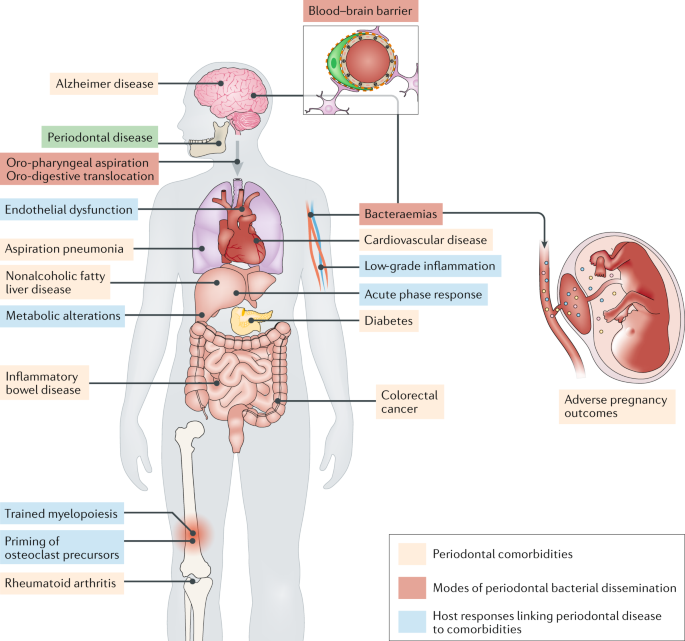
On the basis of epidemiological, clinical intervention and animal model-based studies, periodontitis has been linked with a number of comorbid conditions, such as those indicated. Mechanistically, periodontitis is associated with bacteraemias and systemic inflammation, which can induce acute-phase responses as well as metabolic and inflammatory alterations in the liver and bone marrow, activities that can influence comorbid conditions. Moreover, periodontal bacteria can disseminate by different routes — haematogenous, oro-pharyngeal and oro-digestive — to reach extra-oral sites where they can cause or exacerbate inflammatory pathologies. |