BioAcyl Corp

BioAcyl Corp |
|
 |
 |
 |

|
Chan, Y.-H., Fong, S.-W., Poh, C.-M., Carissimo, G., Yeo, N. K.-W., & Amrun, S. N., et al. (2021). Asymptomatic covid-19: Disease tolerance with efficient anti-viral immunity against sars-cov-2. EMBO Molecular Medicine, 13(6), e14045. Added by: Dr. Enrique Feoli (22/07/2021, 18:51) Last edited by: Dr. Enrique Feoli (22/07/2021, 19:06) |
 |
| Resource type: Journal Article Published DOI: https://doi.org/10.15252/emmm.202114045 BibTeX citation key: Chan2021 View all bibliographic details  |
Categories: BioAcyl Corp Subcategories: Asymptomatic COVID-19 Creators: Amrun, Carissimo, Chan, Chang, Chee, Fong, Goh, Kalimuddin, Lee, Lee, Lee, Leo, Lim, Poh, Rötzschke, Tan, Tay, Torres-Ruesta, Wang, Wang, Xu, Yeo, Young Collection: EMBO Molecular Medicine |
Views: 24/339
|
| Abstract |
|
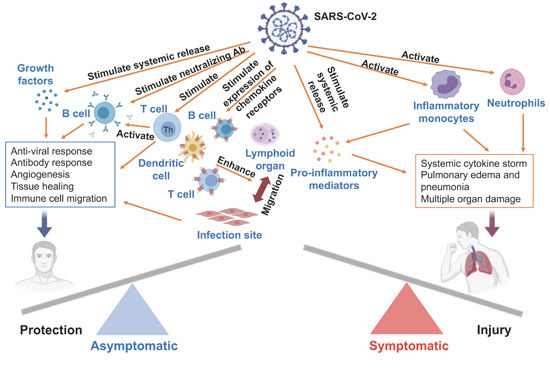
Abstract The immune responses and mechanisms limiting symptom progression in asymptomatic cases of SARS-CoV-2 infection remain unclear. We comprehensively characterized transcriptomic profiles, cytokine responses, neutralization capacity of antibodies, and cellular immune phenotypes of asymptomatic patients with acute SARS-CoV-2 infection to identify potential protective mechanisms. Compared to symptomatic patients, asymptomatic patients had higher counts of mature neutrophils and lower proportion of CD169+ expressing monocytes in the peripheral blood. Systemic levels of pro-inflammatory cytokines were also lower in asymptomatic patients, accompanied by milder pro-inflammatory gene signatures. Mechanistically, a more robust systemic Th2 cell signature with a higher level of virus-specific Th17 cells and a weaker yet sufficient neutralizing antibody profile against SARS-CoV-2 was observed in asymptomatic patients. In addition, asymptomatic COVID-19 patients had higher systemic levels of growth factors that are associated with cellular repair. Together, the data suggest that asymptomatic patients mount less pro-inflammatory and more protective immune responses against SARS-CoV-2 indicative of disease tolerance. Insights from this study highlight key immune pathways that could serve as therapeutic targets to prevent disease progression in COVID-19.
|
| Notes |
Added by: Dr. Enrique Feoli Last edited by: Dr. Enrique Feoli |