BioAcyl Corp

BioAcyl Corp |
|
 |
 |
 |

|
Myszor, I. T., & Gudmundsson, G. H. (2023). Modulation of innate immunity in airway epithelium for host-directed therapy. Frontiers in immunology, Volume 14 - 2023. Added by: Dr. Enrique Feoli (22/01/2026, 16:17) Last edited by: Dr. Enrique Feoli (22/01/2026, 16:30) |
 |
| Resource type: Journal Article Published DOI: 10.3389/fimmu.2023.1197908 ID no. (ISBN etc.): 1664-3224 BibTeX citation key: Myszor2023 View all bibliographic details  |
Categories: BioAcyl Corp Subcategories: Mucosal Immunity Keywords: 4-PBA, deoxycholic acid, phenylbutyrate, vitamin D3 Creators: Gudmundsson, Myszor Collection: Frontiers in immunology |
Views: 26/129
|
| Abstract |
|
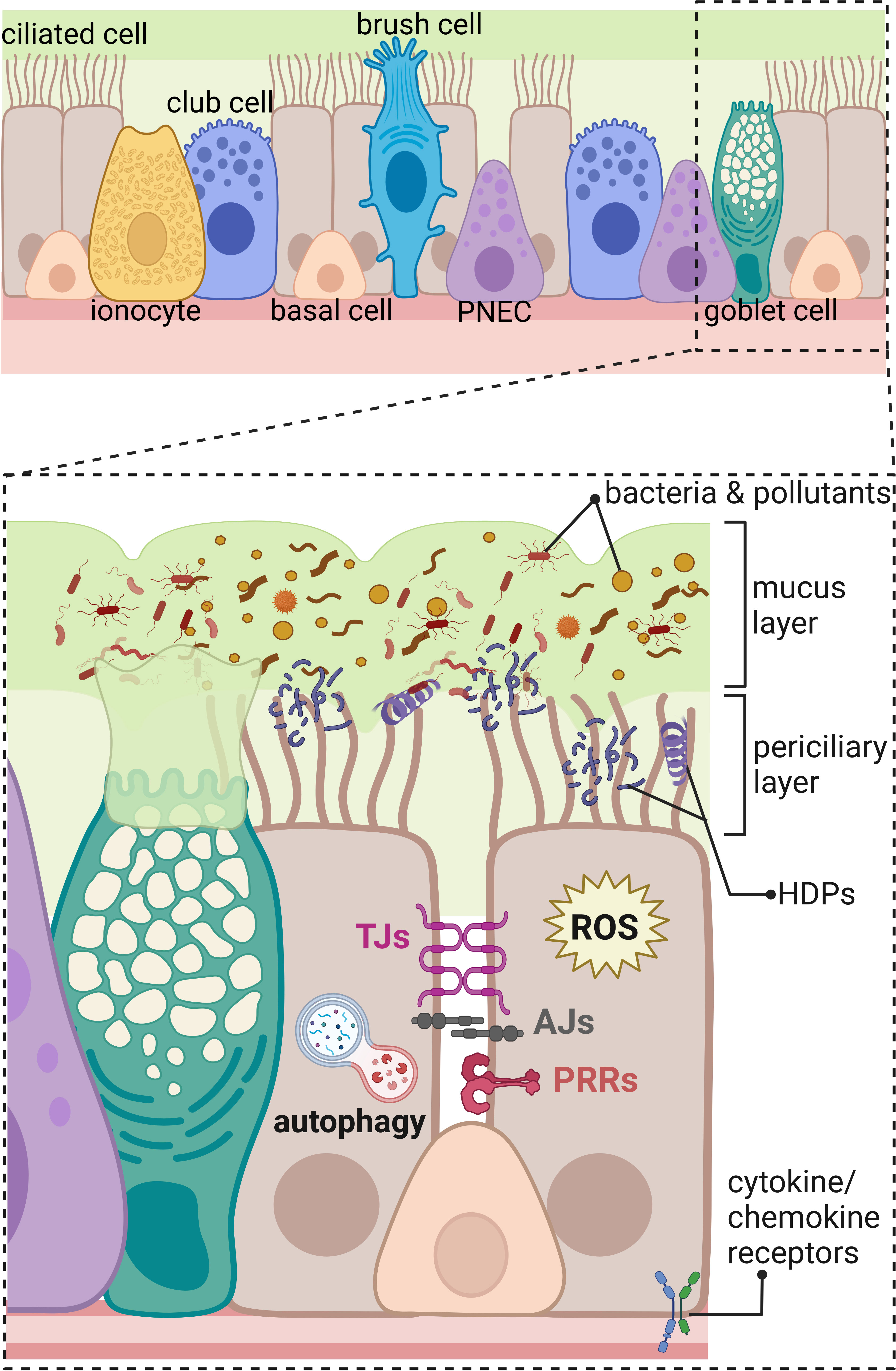
Innate immunity of the mucosal surfaces provides the first line defense from invading pathogens and pollutants conferring protection from the external environment. Innate immune system of the airway epithelium consists of several components including mucus layer, mucociliary clearance of beating cilia, production of host defense peptides, epithelial barrier integrity provided by tight and adherens junctions, pathogen recognition receptors, receptors for chemokines and cytokines, production of reactive oxygen species and autophagy. Therefore, multiple components interplay with each other for efficient protection from pathogens that still can subvert host innate immune defenses. Hence, modulation of innate immune responses with different inducers to boost host endogenous front-line defenses in the lung epithelium to fend off pathogens and to enhance epithelial innate immune responses in the immunocompromised individuals is of interest for host directed therapy. Herein, we reviewed possibilities of modulation innate immune responses in airway epithelium for host directed therapy presenting an alternative approach to standard antibiotics.
Added by: Dr. Enrique Feoli Last edited by: Dr. Enrique Feoli |
| Notes |
|
Cell junctional complexes The structural elements of the airway epithelial barrier integrity are tight (TJs) and adherens junctions (AJs) that determine the polarization of the epithelial cells into the apical and basolateral site providing physical barrier regulating paracellular flux through epithelial layers (119). Hence, the epithelial barrier integrity provided by TJs and AJs can be considered as part of the epithelial defense system (Figure 1). TJs and AJs are composed of transmembrane proteins, such as occludin, tricellulin, claudins, and junctional adhesion molecules (JAMs) and many others present in TJs together with E-cadherin and nectins in AJs. Transmembrane proteins of TJs interact with the proteins of the intracellular junctional plaque containing multiple interaction domains, such as zonula occludens-1 (ZO-1)—a well-defined protein from the junctional plaque complex—and its deletion is lethal in the mouse embryos. The examples of AJs intracellular junctional plaque proteins are α- and β- and p120 catenins and afadin (AF6) displaying similar functions. The intracellular junctional plaque proteins are coupled to cytoskeleton proteins, for example to actin through C-terminal domain of ZO-1 (119). The importance of the functional epithelial barrier sealing the deeper tissues from the external environment for the maintenance of the local tissue homeostasis seems to be explained by the epithelial barrier hypothesis (120). It highlights that the leaky epithelial layer caused by disruption of TJs and AJs by detergents, pollutants, allergens, and pathogens (121–125) contributes to increased incidence of allergies, asthma, and autoimmune diseases (120). The exposure to such environmental insults creates a positive feedback loop of further epithelial layer destruction. This process includes a subsequent translocation of the microbiota and opportunistic pathogens through a disrupted epithelial layer to the lamina propria that activates macrophages and T cells, ultimately leading to inflammation (120). During inflammatory response, cytokines cause further disintegration of tight junctions in the airway epithelium (126, 127), exacerbating the inflammatory response that may become a chronic state. Therefore, the disruption of the net of TJs and AJs can be considered as one of the early onsets of the disease. Hence, the maintenance of the epithelial barrier integrity is crucial for balanced innate and adaptive immune responses in the airway epithelium. Added by: Dr. Enrique Feoli Last edited by: Dr. Enrique Feoli |