BioAcyl Corp

BioAcyl Corp |
|
 |
 |
 |

|
Ghosh, S., Roy, S., & Baid, N. (2025). Host AAA-ATPase VCP/p97 lyses ubiquitinated intracellular bacteria as an innate antimicrobial defence. Nature Microbiology, 10(5), 1099–1114. Added by: Dr. Enrique Feoli (17/11/2025, 02:04) Last edited by: Dr. Enrique Feoli (17/11/2025, 02:07) |
 |
| Resource type: Journal Article Published DOI: 10.1038/s41564-025-01984-y ID no. (ISBN etc.): 2058-5276 BibTeX citation key: Ghosh2025 View all bibliographic details  |
Categories: BioAcyl Corp Keywords: Cellular microbiology, Innate immunity Creators: Baid, Ghosh, Roy Collection: Nature Microbiology |
Views: 25/160
|
| Abstract |
|
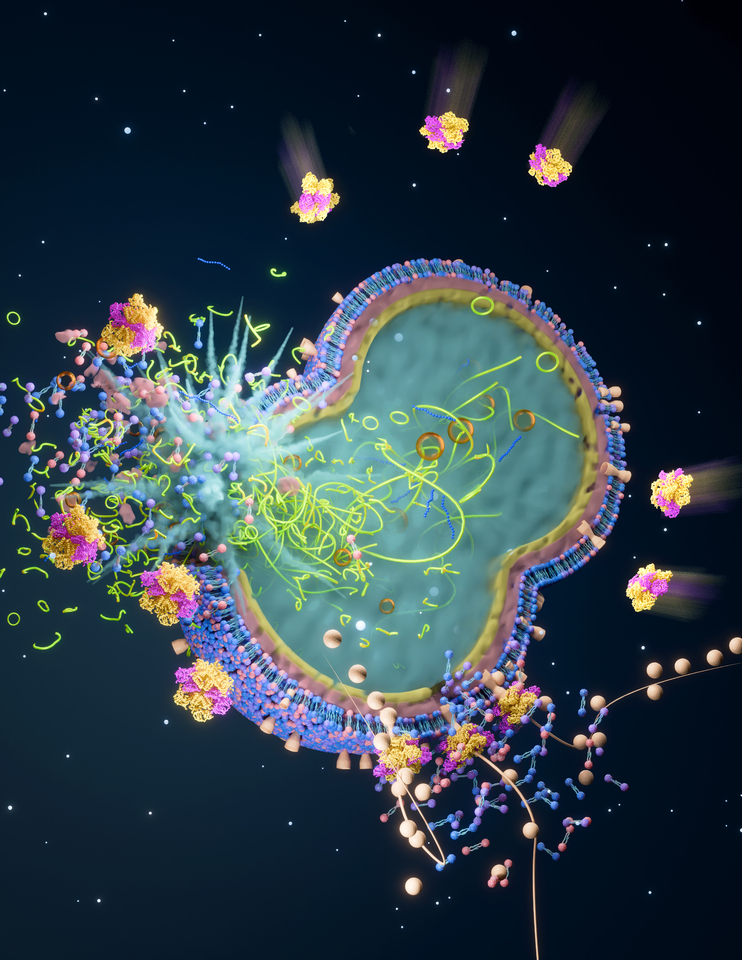
Cell-autonomous immunity prevents intracellular pathogen growth through mechanisms such as ubiquitination and proteasomal targeting of bacteria for degradation. However, how the proteasome eradicates ubiquitinated bacteria has remained unclear. Here we show that host AAA-ATPase, VCP/p97, associates with diverse cytosol-exposed ubiquitinated bacteria (Streptococcus pneumoniae, Salmonella enterica serovar Typhimurium, Streptococcus pyogenes) and requires the ATPase activity in its D2 domain to reduce intracellular bacterial loads. Combining optical trap approaches along with molecular dynamic simulations, in vitro reconstitution and immunogold transmission electron microscopy, we demonstrate that p97 applies mechanical force to extract ubiquitinated surface proteins, BgaA and PspA, from S. pneumoniae cell membranes. This causes extensive membrane lysis and release of cytosolic content, thereby killing the pathogen. Further, p97 also controls S. pneumoniae proliferation in mice, ultimately protecting from fatal sepsis. Overall, we discovered a distinct innate antimicrobial function of p97 that can protect the host against lethal bacterial infections.
|
| Notes |
|
|